



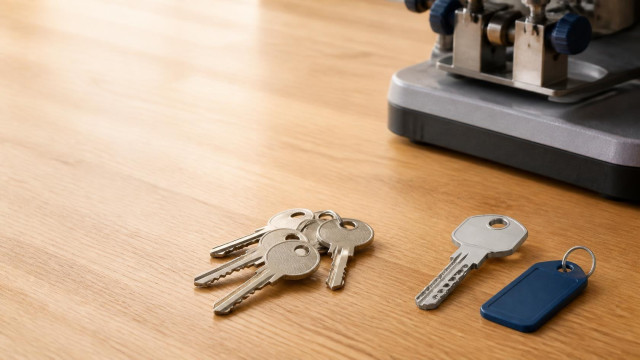
Having a spare key seems straightforward until a key cutter tells you that your key needs special authorisation. While many ordinary house keys can be duplicated, others belong to systems that control who can request additional copies.
The distinction is not simply whether a machine can reproduce the key’s shape. Access to the correct blank, the provider’s equipment and the system’s authorisation requirements also matter. Before arranging another copy, it helps to understand which type of key you hold.
How Standard Key Duplication Works
Standard key duplication generally involves identifying a suitable blank and cutting it to match an existing key. Many ordinary residential keys fall into this category, making additional copies relatively straightforward when the right blank and equipment are available.
However, appearance alone does not confirm that a key is unrestricted. A key used for a home, workplace or apartment building should be assessed before assuming it can be copied through an ordinary retail service. A locksmith can help distinguish a standard key from one belonging to a controlled system.
What Makes Restricted Keys Different?
A restricted key system is designed to control the supply of additional keys. Rather than allowing any keyholder to obtain another copy, it uses an approval process established for that particular system.
The key profile and supply of blanks are controlled, and copies are normally ordered through an authorised provider. That provider checks whether the request has the necessary approval before supplying another key. The person who carries the key is not necessarily the person authorised to order copies.abetta+1
This distinction matters for workplaces, shared buildings and other properties where several people need access. The objective is not to make duplication magically impossible, but to manage how legitimate copies are issued.
Does “Do Not Copy” Automatically Mean Restricted?
No. A “Do Not Copy” or “Do Not Duplicate” stamp does not, by itself, establish that a key belongs to a restricted system. Similar wording may appear on an ordinary key as a warning or on a genuinely controlled key.
However, the stamp should not be treated as permission to ignore the property’s access arrangements. Ask the property owner, building manager or authorised locksmith to identify the system and explain the correct process. Avoid making assumptions about duplication rights from the wording alone.
How to Arrange an Authorised Copy
Start by identifying who manages the key system. Depending on the property, this may be the owner, strata manager, business manager or another nominated representative.
Next, ask which locksmith or supplier handles additional keys and what documentation is required. You may need written approval, identification or details associated with the registered system. Requirements vary, so confirm them before visiting a key-cutting outlet.
For anyone comparing key cutting Sydney services, the useful first question is whether the provider handles that particular key type—not simply how quickly it can produce a copy. Clockwork Locksmiths advises customers with restricted keys to follow the authorised process and provide the required evidence of permission.
What Apartment Residents Should Check
An apartment key may be part of a managed building system, even when it looks similar to an ordinary house key. Before arranging a spare, check with the landlord, property manager or strata manager about who can approve the request.
Possessing a working key does not automatically give someone authority to order another. Following the building’s process helps avoid an unnecessary trip to a provider that cannot supply the correct key or accept the request.
Choose the Right Process, Not Just Another Copy
Many keys can be duplicated, but not every key can be copied through the same channel. Standard keys generally involve a suitable blank and cutting equipment; restricted keys add controlled supply and authorisation requirements.
Before ordering, identify the key, confirm who can approve copies and contact an appropriate provider. Understanding those differences makes obtaining a spare more straightforward while respecting the property’s access controls.
